

This week I was in Vienna for Extractables & Leachables Europe 2026, hosted by Smithers.
I opened my talk, "Predictive Polymer Degradation Modelling for E&L Risk Assessment: The A2P2-AI Platform", with something I had learned the day before. Talking to E&L teams, I found that extractables are often measured on new or freshly sterilised parts. But a polymer keeps changing on the shelf: some species fade, others build up. A new part tells you about day one; the patient gets day nine hundred.
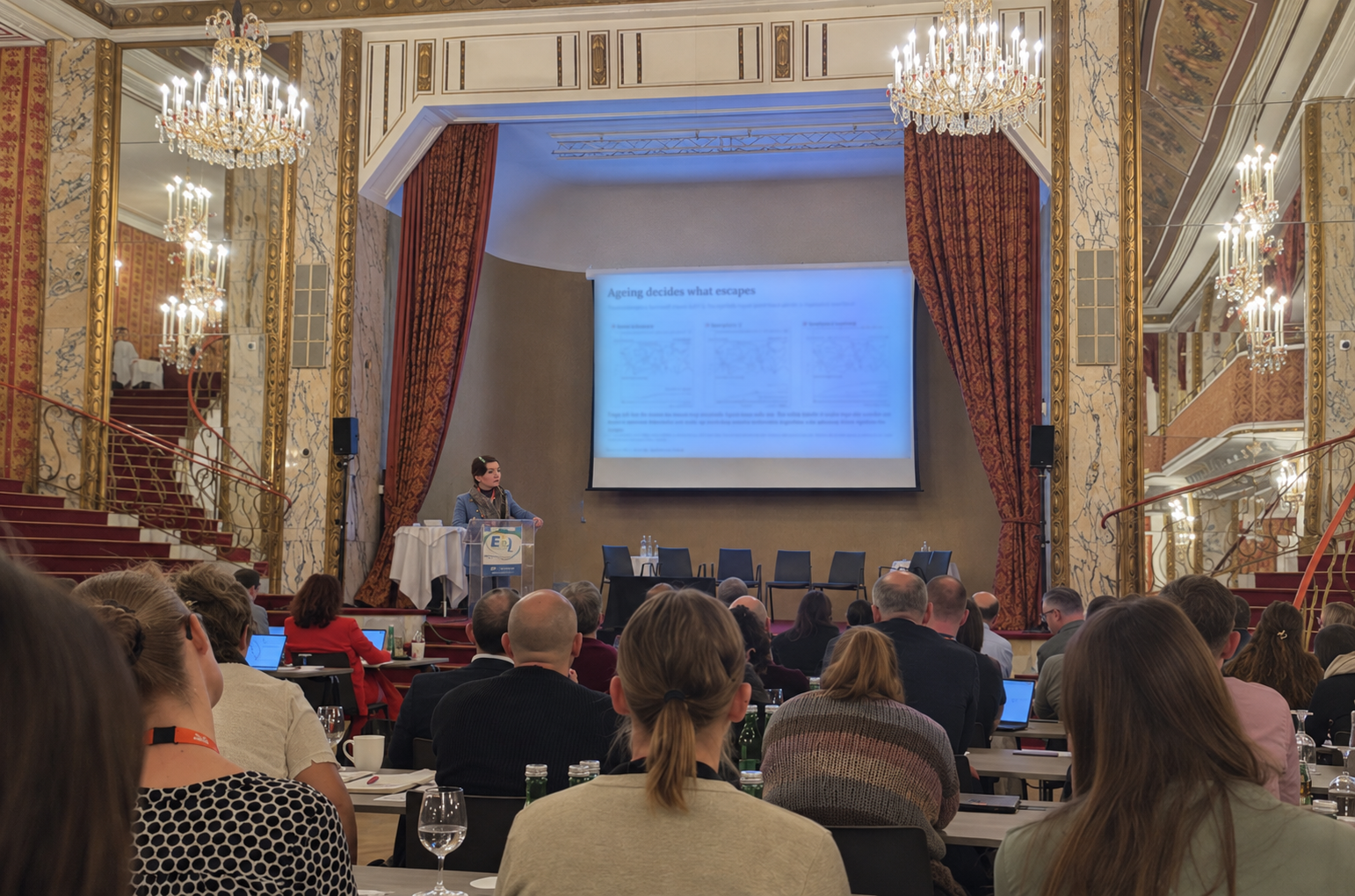
Above: a composite of me at the lectern, with one of my slides on the screen.
So the talk was about the ageing that produces the end-of-shelf-life sample, and what happens when it goes wrong: samples that are younger than their label, ovens pushed past a transition that create species the real product would never see, and one oven trying to keep several clocks at once. An end-of-shelf-life leachables study is only as good as the ageing that produced the sample.
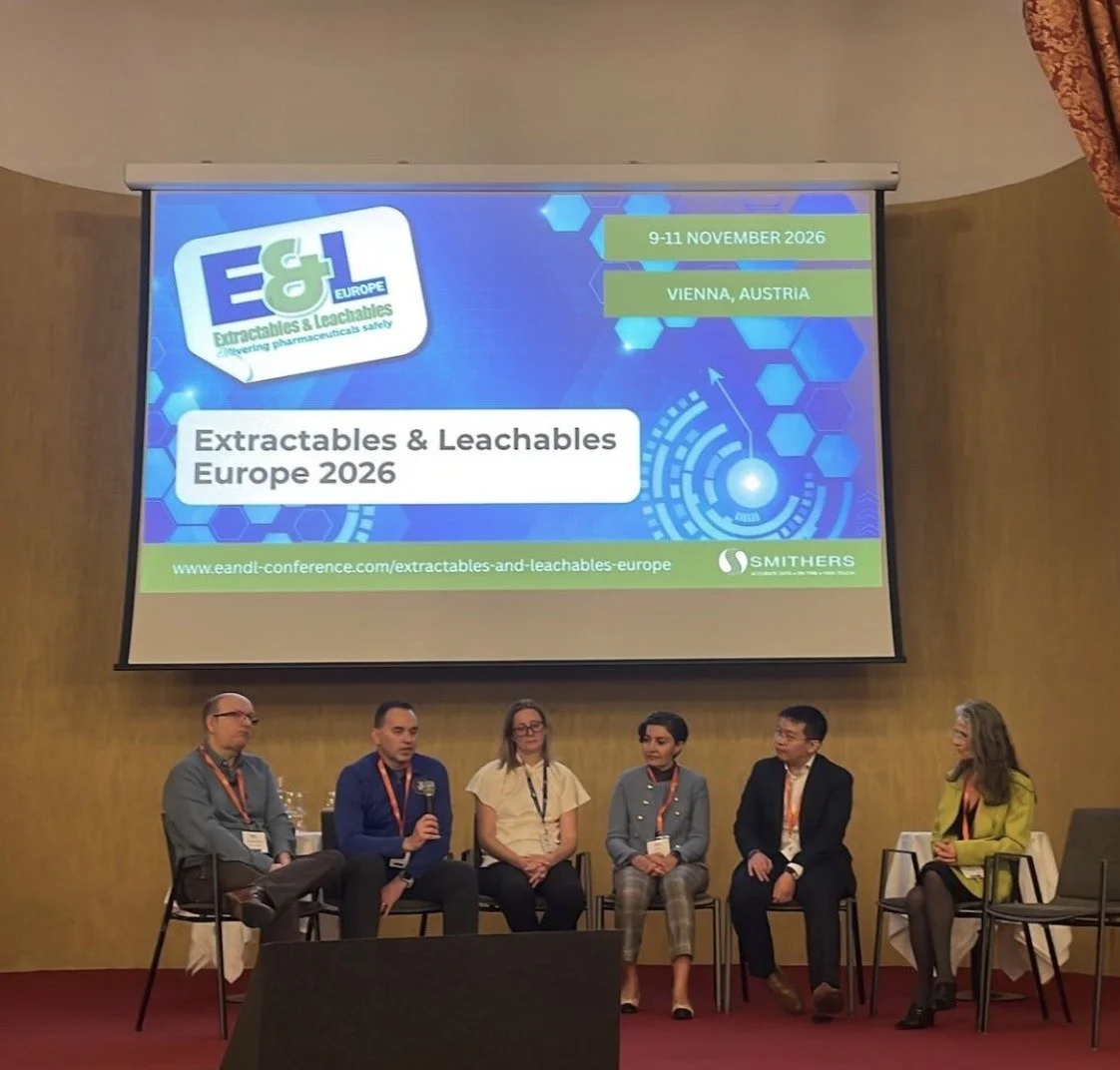
On Tuesday's panel on digital tools in E&L, my one-line answer was that prediction shouldn't replace experimental testing; it should decide which testing is worth doing.
Thank you to Smithers and to my fellow panellists.

And a note for future organisers: from now on, I only accept invitations to events held in a ballroom like this one. Painted ceiling and chandeliers non-negotiable.
Panel photo: Smithers.
